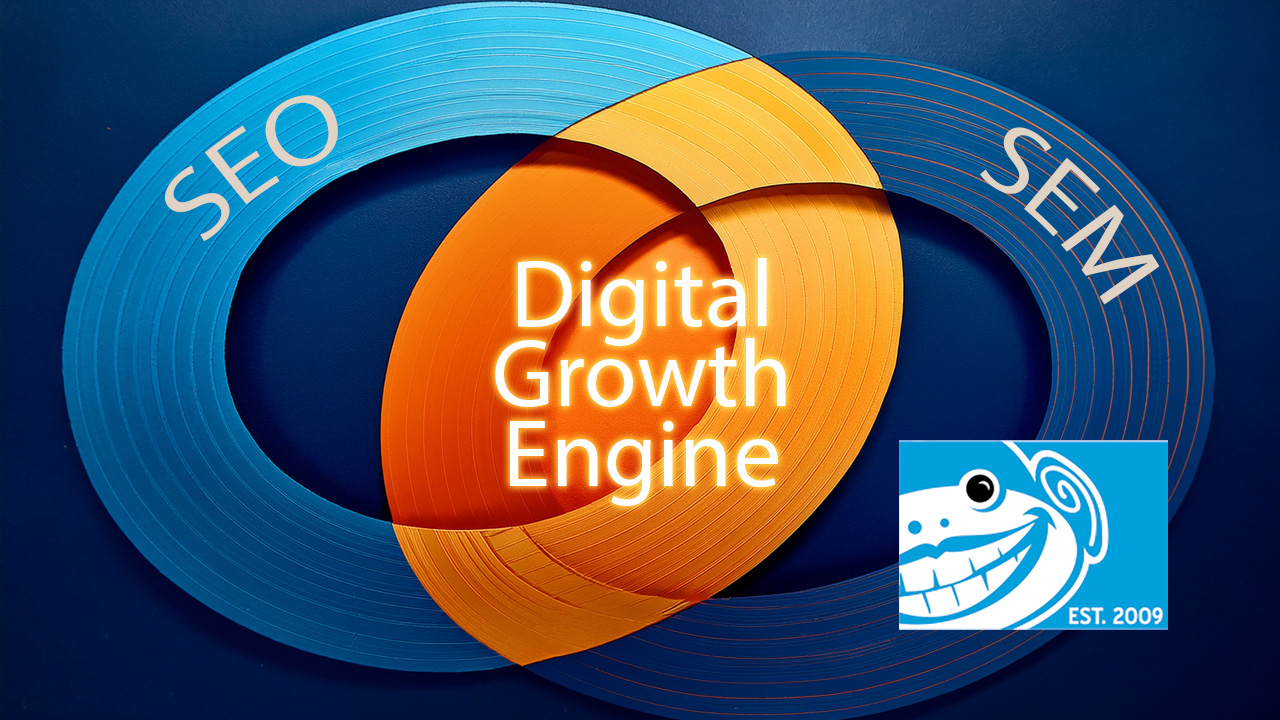
The terms “SEO” and “SEM” often get tossed around like interchangeable buzzwords. Both deal with search engines. Both influence visibility. Both can drive traffic. But treating them as the same thing is one of the fastest ways to waste budget, miss opportunities, and misunderstand what’s actually working with your marketing.
At Barrel O’Monkeyz, we see this confusion all the time—especially when companies are scaling, resetting their marketing, or trying to understand why their online presence isn’t converting the way it should. The truth is simple: SEO and SEM are two different engines with two different jobs, and when you understand how they work together, you unlock a more predictable, measurable path to growth.
SEO: The Long‑Game Visibility Engine
Search Engine Optimization (SEO) is the discipline of improving your website so it ranks organically—meaning you don’t pay for the click. It’s built on three pillars:
- Technical SEO: Site speed, mobile responsiveness, crawlability, and structure
- On‑Page SEO: Content quality, keyword alignment, metadata, and user experience
- Off‑Page SEO: Backlinks, authority signals, and reputation
SEO is slow, steady, and powerful. It builds trust with search engines and audiences. It positions your brand as the answer—not just a sponsored ad.
But SEO is not instant. It requires consistency, content, and a strategic roadmap. It typically takes 3 to 6 months to show early traction and 6 to 12 months to deliver meaningful results. When done well, SEO can become one of the highest‑ROI channels in your entire marketing arsenal.
SEM: The Precision, Pay‑to‑Play Accelerator
Search Engine Marketing (SEM), often referred to as paid search or PPC, is the paid side of search. You bid on keywords, place ads, and pay when someone clicks. SEM is:
- Fast: You can appear at the top of search results within hours
- Targeted: You choose the keywords, audiences, and intent signals
- Measurable: Every click, impression, and conversion is trackable
SEM is ideal for campaigns that need immediate traction—product launches, seasonal pushes, competitive positioning, or filling pipeline gaps. But it’s also easy to overspend if you’re not managing your bids, quality scores, and landing page relevance well.
Where SEO strengthens your foundation over time, SEM gives you rapid visibility. Each plays a different role, and they work best in tandem.
Why the Distinction Matters
When marketers and business leaders lump SEO and SEM together, they often make one of three mistakes:
1. Misaligned Expectations
If you expect SEO to deliver overnight results, you’ll think it’s “not working.” If you expect SEM to build long‑term authority, you’ll overspend on clicks that never convert.
Understanding the difference helps you set realistic timelines and KPIs.
2. Misallocated Budget
SEO requires investment in content, optimization, and technical improvements. SEM requires ongoing ad spend and constant optimization.
When you treat SEO and SEM as the same, you risk starving one channel while overspending on the other.
3. Misread Performance
Organic traffic and paid traffic behave differently. Organic leads often convert at higher rates because they are generally more trusted. Paid leads convert faster because they’re triggered by searches from people who are ready to act.
If you don’t separate the data, you can’t see what’s actually driving revenue.
Why Marketing Leaders Should Care
Search is where your customers go to solve problems, compare options, and make decisions. Whether you’re B2B or B2C, whether you sell services or products, search behavior reveals intent—and intent is the most valuable signal in marketing.
Leaders who understand SEO and SEM can:
- Make smarter budget decisions
- Build predictable pipelines
- Strengthen brand authority
- Improve customer acquisition costs
- Hold marketing accountable to performance metrics
Let’s Get Started
SEO and SEM are not competing strategies—they’re complementary digital marketing levers. The most effective marketing engines don’t choose between SEO and SEM—they integrate them.
- SEM identifies high‑intent keywords you can later target organically
- SEO improves landing page quality, lowering SEM costs
- SEM fills the gap while SEO gains traction
- SEO builds authority that improves SEM performance
Barrel O’Monkeyz helps businesses integrate SEO and SEM into a unified, accountable digital engine—one that increases visibility, drives qualified traffic, and nurtures leads. Contact us by phone or email to schedule a free consultation. Together, we’ll explore your goals, develop a plan, finalize the details, and hit the ground running to turn ideas into action.
